Marketing Automation for Christian Ministries

Turn More Contacts Into Real Relationships. Participants. Supporters. Leaders. Conversations.

Someone downloads a resource, registers, subscribes, or gives. That’s not the end of the campaign. It’s the beginning of the relationship. We help ministries make sure the right people get the right next step, without staff managing every interaction by hand.
After one form
Illustrative
Day 0
Know
Downloads a leadership guide from a Facebook ad
Day 0
Respond
Guide delivered. Welcome note says why we sent it.
Day 3
Nurture
A related article on the same topic. Opened.
Day 10
Nurture
Invited to the leadership webinar. Registered.
Day 14
Connect
Four of four opened. Routed to a regional director.
Five touches. Zero staff hours. One conversation that matters.

Marketing automation experience with Christian ministries

Our Daily Bread Ministries
C12 Business Forums
CDF Capital
Corporate Chaplains
World Impact
An email address is not a relationship

Your Database Is Growing Faster Than Your Relationships.

One person in your database may be several of these at once:

Subscriber

Donor

Event attendee

Resource downloader

Program participant

Prospective leader

Volunteer

New contact

Most ministry systems treat them all the same. Same newsletter, same appeal, same follow-up. Or nothing at all after the first interaction.

The problem starts after someone responds

Then Someone Fills Out the Form. What Happens Now?

They find you

Search, an ad, a friend

They respond

A download, a registration, a gift

What happens now?

This is where most ministries lose them

Too often the contact lands in the database with no context, gets one generic email, or hears nothing at all. That’s where marketing automation should help.

How ministry automation works

Know → Respond → Nurture → Connect

Four steps, in the order a new contact experiences them:
01

Know

Who is this person, and why did they engage? Capture enough to make the next interaction relevant, not every piece of data possible.
02

Respond

Give them the right next step while interest is fresh. The first message should say: we know why you’re here, and here’s what comes next.
03

Nurture

Keep the relationship going without treating everyone the same. The goal isn’t more messages. It’s fewer irrelevant ones.
04

Connect

Know when automation should stop and a person should step in. Technology handles repetition. People handle relationships.
Our Daily Bread Ministries

One Ministry. Many Different Relationships.

Our Daily Bread had Salesforce Marketing Cloud, but it was mostly sending daily devotionals. The ministry had outgrown that. We redesigned the platform around what it actually needed:

Regional campaigns

Multilingual segmentation

Donors treated differently from subscribers

Deeper CRM integration

Ministry teams worldwide

Not more automation. More relevant ministry communication.

The hardest ministry problem is fragmentation

Your Systems Should See One Person, Not Five Records.

Each system knows one thing about the same person. No one has the whole picture. We connect the parts that matter:

CRM

Email platform

Website and forms

Donation platform

Event system

Advertising

SMS

Automation platform

The technology matters. The bigger question: does the ministry know enough about this person to serve them better?

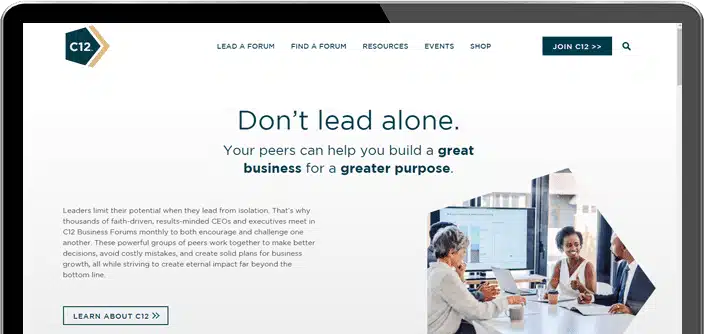
C12 Business Forums

The Download Was Only the First Step.

Facebook ad

Christian business leaders

Planning guide

A reason to respond

Nurture sequence

Automated, relevant

Webinar

For the interested

Chair conversation

A person steps in

As many leads as the previous four years combined, converting to sales-qualified at a record rate. A conversion creates an opportunity. Follow-up determines what happens to it.

Before you pay for the next thousand names

What Happened to the Last Thousand?

Your ministry may already be investing heavily in acquisition. Before buying more names, ask about the ones you have:

You may not need more contacts. You may need more value from the relationships you’ve already started.

What we help ministries improve

From the First Response to the Right Conversation.

Audience & Journey Strategy

Who matters most, and what a meaningful next step looks like for each group.

Marketing Automation

Triggers, workflows, routing, and segmentation built around real ministry behavior.

Email & SMS

Timely, useful communication based on what someone actually did.

Nurturing

Journeys that deepen relationships instead of repeating the same ask.

Forms & Conversion Paths

Better forms, so automation starts with better information.

CRM & Data Integration

Connected systems, so staff and automation share the same context.
Frequently asked questions

Questions We Hear From Ministry Teams

Welcome communication, resource delivery, event reminders, subscriber journeys, donor communication, program follow-up, internal notifications, contact routing, and longer-term nurturing. Automation works best when it removes repetitive work without making the communication feel impersonal.

Not necessarily. We first look at what you’re already using and where the actual breakdown is. Sometimes the existing platform is capable but poorly configured. Our Daily Bread is a good example: the opportunity wasn’t replacing Salesforce Marketing Cloud, it was redesigning how the organization used it.

No. Email and SMS are communication channels. Marketing automation determines who receives the communication, what triggers it, when it happens, what should happen next, and when a person needs to become involved.

Nurturing focuses on developing the relationship over time. Marketing automation is the system that recognizes behavior, manages triggers, routes contacts, and makes that nurturing happen at the right time.

Ministry Marketing Automation Review

Don’t Let a New Relationship Become a Dead End.

You already invested the time and money to get someone’s attention. They responded. Now make that response matter.
The review looks at