You can’t tell Meta “show this to the right Christians.” So ministries end up with plenty of impressions, clicks, and even leads, but too few of the people they actually wanted to reach. That’s the problem we work to solve.
The lesson wasn’t simply that Facebook advertising worked. The entire campaign worked together, and it was eventually expanded internationally.
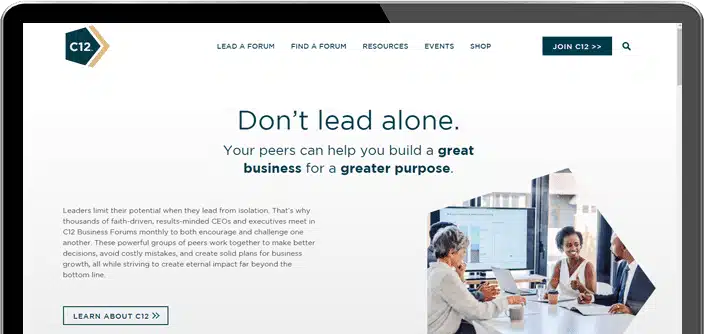
This same connected approach was part of the C12 campaign: advertising, landing pages, CRM activity, resource delivery, and follow-up designed to work together.
Then we use that information to determine what’s working, what’s wasting budget, and what should be improved next.
A better audience
A stronger offer
A better landing page
Better follow-up
Knowing which leads are actually valuable
Improve the journey from the first ad through conversion and follow-up before assuming the answer is more media spend. Spend smarter before automatically spending more.
Yes. We use a combination of first-party data, existing audiences, engagement, lookalikes, geography, campaign behavior, and testing rather than depending on one broad targeting option.
Common campaigns include resources, events, training, programs, subscriber acquisition, recruitment, registrations, and other ministry initiatives.
No. That’s one of the biggest differences in our approach. If the ad is working but the landing page or follow-up isn’t, optimizing the ad alone won’t solve the problem.
Yes. In fact, that can be the best place to start, because we can see what you’re already paying for and where people may be dropping out.
How to Evaluate Answer Engine Visibility Tracking Solutions
How to Refresh Stale Content for AI Visibility
Stop Choosing Ad Winners by Cost Per Lead Alone
Why Ad and Landing Page Message Match Matters