Most content does not stop working overnight.
It fades.
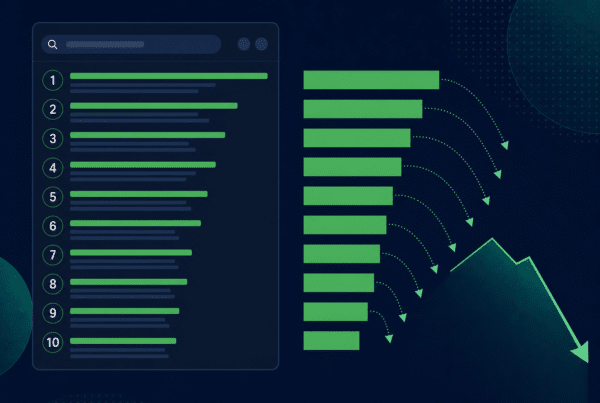
At first, the drop may be small. A blog post that used to bring in steady traffic slips a few positions in Google. A service page still gets visitors, but fewer people call or fill out a form. An article that once felt helpful starts to sound outdated. A landing page gets impressions, but fewer clicks.
Nothing looks broken.
The page is still live. It may still be indexed. It may still get some traffic. But it is not doing the job it used to do.
That is content decay.
Content decay happens when a piece of content becomes less visible, less useful, or less effective over time. It may lose rankings, traffic, engagement, conversions, leads, or trust. Sometimes the topic has changed. Sometimes competitors have improved. Sometimes the page no longer matches what people expect. Sometimes the content is simply old.
The good news is that content decay is not always a dead end.
In many cases, a decaying page already has value. It may have backlinks. It may have search history. It may have some authority. It may still answer a question people care about. It may simply need to be refreshed, expanded, repositioned, or connected to a better next step.
That is where content analytics comes in.
Content analytics helps you see which pages are fading, why they are fading, and what to do next. It turns content decay from a vague traffic problem into a practical improvement opportunity.
And that is the bigger idea behind living content.
Living content is content that is watched, measured, improved, and refreshed over time based on how people actually use it. Instead of publishing a page once and letting it slowly grow stale, you keep learning from the data and making the content more useful.
Content decay is what happens when content is ignored.
Living content is what happens when content is cared for.
What Is Content Decay?
Content decay is the gradual decline of a content asset’s performance over time.
That decline can show up in several ways. A page may lose organic traffic. It may drop in search rankings. It may get fewer impressions. It may earn fewer clicks. It may still get visitors, but produce fewer leads. It may become outdated, thin, confusing, or less useful compared to newer content from competitors.
The key word is decline.
A page does not have to disappear from search results to be decaying. It may simply be losing strength.
For example, a blog post that once ranked in position 4 may now rank in position 11. That is a major change. The page may still exist, but it has likely lost most of its meaningful search visibility.
A service page may still get traffic, but if calls and form fills are dropping, the page may be losing conversion value.
A guide may still be accurate in a general sense, but if competitors now have better examples, stronger structure, newer data, and clearer answers, your page may feel less helpful than it used to.
Content decay is not only an SEO problem.
It is a usefulness problem.
When content becomes less useful, less current, or less aligned with what people need, performance usually follows.
Why Content Decay Happens
Content decay usually happens for one of several reasons.
Sometimes the information gets old. Statistics change. Tools change. best practices change. Industries change. A page that was helpful in 2021 may not fully answer the question in 2026.
Sometimes search intent changes. Google may start rewarding a different type of page. A keyword that once favored short blog posts may now favor detailed guides, comparison pages, videos, tools, or product pages.
Sometimes competitors improve. They add examples, visuals, original research, better formatting, expert quotes, FAQs, stronger internal links, and better titles. Your page may not get worse, but other pages get better.
Sometimes your own site creates confusion. You may have multiple articles competing for the same topic. Internal links may point to outdated pages. Important pages may be buried. A newer page may unintentionally weaken an older one.
Sometimes the page attracts the wrong audience. It may rank for related keywords, but not the queries that lead to qualified visitors.
Sometimes the page fails to move people forward. The content may get traffic, but the call to action is too aggressive, too vague, or disconnected from what the reader actually needs.
And sometimes content decays because no one is paying attention.
That may be the most common reason.
Many companies put most of their energy into publishing new content. They rarely go back to study what already exists. Over time, older pages lose visibility, usefulness, and conversion value while the team keeps creating more content on top of a weakening foundation.
That is a costly mistake.
Your existing content may be one of your best growth opportunities.
How to Know If a Page Is Decaying
You cannot fix content decay until you can see it.
The first sign is usually a decline in organic traffic, but traffic is not the only thing to watch. A page can decay in several different ways.
The simplest way to diagnose decay is to compare performance over time.
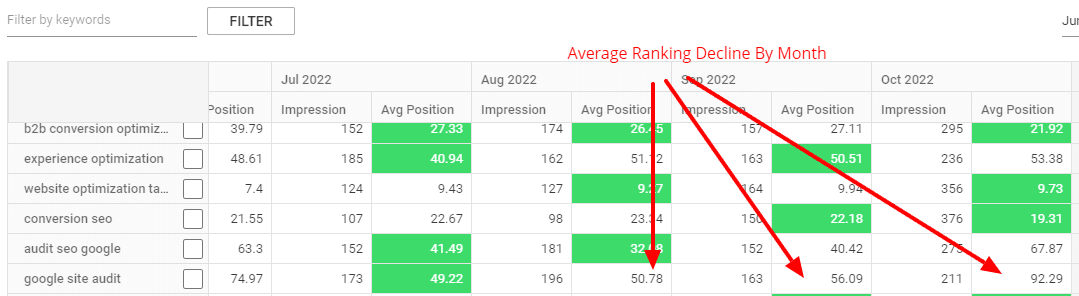
Look at the last 3 months compared to the previous 3 months. Then look at the last 6 months compared to the same period last year. You want to see whether the decline is temporary, seasonal, or part of a real downward trend.
A decaying page may show signs like these:
A steady drop in organic clicks
A decline in search impressions
Lower average ranking positions
A lower click through rate from search
Less engagement on the page
Lower scroll depth
Fewer internal link clicks
Fewer form fills, calls, purchases, or signups
Fewer assisted conversions
Loss of featured snippets or other search features
Outdated information
Competitors overtaking the page
A mismatch between the page and current search intent
The best diagnosis comes from looking at these signals together.
If impressions are dropping, the page may be losing visibility.
If impressions are steady but clicks are dropping, the title or meta description may no longer be earning attention.
If clicks are steady but engagement is dropping, the page may not be satisfying the reader.
If engagement is strong but conversions are weak, the next step may be wrong.
If rankings are slipping, the page may need better depth, freshness, structure, authority, or internal support.
This is why content analytics matters. It helps you avoid guessing.
Start With the Most Valuable Pages
Not every old page deserves your attention.
Some pages decay because they were never that valuable. Some topics no longer matter. Some pages are too far removed from your current services, audience, or business goals. Some posts may bring traffic, but not the kind of traffic you want.
So before you fix anything, prioritize.
Start with pages that have at least one of these qualities:
They used to bring meaningful traffic.
They rank for keywords connected to your services.
They have backlinks or authority.
They support important buyer questions.
They have conversion potential.
They help sales conversations.
They explain a topic you want to be known for.
They belong inside a larger content hub.
This matters because content refresh work should not be random.
The goal is not to update everything.
The goal is to improve the pages that can create the most value for readers and the business.
For Click Laboratory, this article is a good example. A page about content decay belongs inside a larger content analytics hub. It supports the bigger idea that analytics should help companies find what is fading, improve what already exists, and build living content.
That makes it worth improving.
Diagnose the Real Problem Before You Rewrite
One of the biggest mistakes people make with content decay is jumping straight into rewriting.
The page is down, so they open the article and start adding words.
That can help, but it can also waste time.
Before you rewrite, figure out why the page declined.
Start with Google Search Console. Look at the queries the page used to get clicks from. Then compare them to the queries it gets clicks from now. Did you lose visibility for the most valuable terms? Did impressions decline? Did click through rate drop? Did the page start showing for less relevant searches?
Then look at the current search results.
This step is essential.
Search the main keyword and study what ranks today. Do the top pages answer the question differently than your page does? Are they more current? Are they more detailed? Do they include examples, tools, templates, videos, FAQs, or original data? Are they written for beginners, experts, buyers, or researchers?
Then look at the page itself.
Does the opening get to the point quickly?
Is the answer clear?
Is the structure easy to scan?
Are the examples current?
Does the article sound human?
Does it say anything original?
Does it connect to a helpful next step?
Does it link to related pages?
Does it support the broader topic cluster?
Finally, look at behavior data.
If people are arriving but leaving quickly, the page may not be meeting expectations. If they scroll but do not click, the content may be useful but the next step may be weak. If they click to another page but do not convert, the journey may need work.
The purpose of diagnosis is simple.
Do not fix the wrong problem.
The Four Types of Content Decay
Not all content decay is the same.
To fix it well, it helps to know what kind of decay you are dealing with.
1. Visibility Decay
Visibility decay happens when fewer people can find the page.
This usually shows up as declining impressions, rankings, or organic clicks.
Common causes include stronger competitors, outdated content, weak internal linking, search intent changes, technical SEO issues, or loss of search features.
The fix may include refreshing the page, improving the title, adding missing sections, strengthening internal links, updating schema, improving topical depth, or building supporting content.
2. Engagement Decay
Engagement decay happens when people find the page, but they do not stay with it.
This may show up as lower engagement time, lower scroll depth, fewer video views, fewer clicks, or more quick exits.
Common causes include a weak opening, confusing structure, outdated examples, thin content, slow page experience, or a mismatch between the title and the content.
The fix may include rewriting the introduction, moving the answer higher, adding examples, improving formatting, simplifying language, or making the page easier to scan.
3. Conversion Decay
Conversion decay happens when a page still gets visitors, but fewer people take the next step.
This may show up as fewer form fills, calls, downloads, purchases, appointments, newsletter signups, or assisted conversions.
Common causes include a weak CTA, an offer that does not match the reader’s intent, outdated trust signals, unclear service connections, or a broken conversion path.
The fix may include changing the CTA, adding a softer next step, improving internal links, adding proof, updating forms, or connecting the article to a better landing page.
4. Usefulness Decay
Usefulness decay happens when the content is no longer as helpful as it should be.
This may not always show up immediately in traffic. But over time, less useful content usually loses engagement, rankings, links, trust, and conversions.
Common causes include outdated information, shallow explanations, missing examples, old screenshots, generic AI style writing, or failure to answer new questions people now ask.
The fix may include adding current insight, improving accuracy, including examples, adding expert perspective, answering FAQs, and making the article more practical.
This may be the most important type of decay because it is the root of many other problems.
When content becomes less useful, everything else gets harder.
How to Fix Content Decay
Once you know what kind of decay you are dealing with, you can decide how to fix it.
The answer is not always to rewrite the whole page.
Sometimes a page needs a refresh. Sometimes it needs a major rebuild. Sometimes it should be merged with another page. Sometimes it should be redirected. Sometimes it should be left alone because the topic is no longer valuable.
Here is how to think through the options.
Refresh the Page When the Core Topic Is Still Good
A refresh makes sense when the page still targets the right topic, but needs improvement.
This may include updating outdated information, improving the intro, adding missing sections, refreshing examples, improving the title and meta description, adding internal links, and making the page easier to read.
A refresh is best when the page still has some visibility, relevant traffic, backlinks, or strategic value.
Rebuild the Page When the Intent Has Changed
Sometimes the old article is built around the wrong angle.
That is when you need more than a refresh.
If the search results now favor a deeper guide, a stronger framework, a comparison page, or a more practical how to article, the page may need to be rebuilt around the new intent.
This is often the right move for older AI written content. The topic may still be good, but the article may need a stronger point of view, better flow, better examples, and more useful sections.
Merge Pages When You Have Overlap
If you have several weak articles about similar topics, they may be competing with each other.
In that case, the best move may be to combine them into one stronger page.
This can help concentrate authority, improve clarity, reduce duplication, and give readers a better resource.
After merging, redirect the weaker URL to the stronger page when appropriate.
Redirect Pages That No Longer Deserve to Stand Alone
Some pages are too outdated, too thin, or too disconnected from your current strategy to keep.
If the topic still has some relevance, redirect it to a stronger related page.
This helps preserve any remaining authority and gives visitors a better destination.
Repurpose Content That Still Has a Strong Idea
Sometimes the page itself may not be the best format anymore, but the idea is still valuable.
A decaying blog post can become an email, video, checklist, webinar section, sales resource, LinkedIn post, or FAQ section.
This is part of living content.
If an idea is useful, it should not be trapped in one aging format.
A Practical Content Decay Audit
Here is a simple way to audit content decay without making the process overwhelming.
Start by exporting your top organic pages from Google Search Console or your SEO platform. Look for pages that have declined over the last 3 to 12 months.
Then sort those pages into categories.
Pages worth refreshing
Pages worth rebuilding
Pages worth merging
Pages worth redirecting
Pages worth repurposing
Pages worth leaving alone
For each important page, ask these questions:
What did this page used to rank for?
What does it rank for now?
Which queries lost the most clicks?
Did impressions decline, or did click through rate decline?
What pages are ranking above it now?
Are those pages more helpful than ours?
Is our information current?
Does our title still earn the click?
Does the intro answer the reader quickly?
Does the page have examples?
Does it link to the next helpful resource?
Does it support a larger content hub?
Does it lead to a relevant next step?
Is this page still worth investing in?
That last question matters.
A content decay audit should help you make decisions, not just build a spreadsheet.
The goal is not to prove that pages are declining.
The goal is to decide what to do about it.
How Content Analytics Turns Decay Into Living Content
Content decay is what happens when content is left alone for too long.
Living content is what happens when you use analytics to keep improving it.
That process does not need to be complicated.
Measure what is happening.
Diagnose why it is happening.
Improve the content.
Repurpose what still works.
Monitor what changes.
That rhythm turns content into an asset that can keep getting stronger.
For example, imagine an article that used to rank for an important keyword. It has dropped from page one to page two. Instead of writing a brand new post, you use content analytics to study the decline.
You find that the article still gets impressions, but fewer clicks. The title is boring compared to the current search results.
You find that people who do click do not scroll very far. The introduction takes too long to get to the answer.
You find that competitors now include examples, checklists, and clearer next steps. Your page explains the topic, but does not help the reader act.
Now you have a plan.
Rewrite the title. Strengthen the intro. Add a practical checklist. Include examples. Link to the main content analytics hub. Add a better CTA. Repurpose the checklist into a downloadable asset. Then monitor the page over the next few months.
That is the difference between updating content and building living content.
One is a task.
The other is a system.
Where Content Decay Fits Inside a Content Analytics Hub
Content decay should not be treated as a random SEO issue.
It is one part of a larger content analytics strategy.
Content analytics helps you understand how people find, use, engage with, and act on your content. Content decay is one of the most important things content analytics helps you uncover.
A strong content analytics hub should include resources that help readers understand:
What content analytics is
How to measure content performance
How to find content decay
How to build a content analytics dashboard
How to improve customer experience with content analytics
How to measure visibility in AI search and answer engines
How to use content across search, email, social, and sales
This article supports that hub by answering one urgent question:
Which content is fading, and what should we do about it?
That is a question many companies are asking right now.
Traffic is harder to earn. Search results are changing. AI answers are reducing some clicks. Competitors can produce more content faster. Old content is easier to ignore.
So the businesses that win will not only be the ones that publish more.
They will be the ones that learn faster and improve smarter.
Content Decay Mistakes to Avoid
The first mistake is assuming every traffic drop is decay.
Some drops are seasonal. Some happen because a campaign ended. Some happen because search demand changed. Some happen because tracking changed. Before you rewrite a page, make sure you understand the pattern.
The second mistake is refreshing content without checking the search results.
You need to know what Google is rewarding now. If the intent changed, your page may need a new angle, not just updated copy.
The third mistake is adding more words without adding more value.
A longer article is not automatically a better article. If you add fluff, generic explanations, or repeated points, you may make the page worse.
The fourth mistake is ignoring conversions.
A page may lose traffic but still generate qualified leads. Another page may gain traffic but produce nothing. Do not judge content by traffic alone.
The fifth mistake is keeping weak pages just because they exist.
Sometimes the best move is to merge, redirect, or remove content that no longer serves the reader or the business.
The sixth mistake is letting AI written content sit untouched.
AI can help create drafts, but old AI content often lacks specificity, examples, experience, and point of view. If a page sounds generic, readers can feel it. Search engines may not reward it either.
The seventh mistake is treating content refreshes as one time fixes.
A page may improve after a refresh, but it still needs to be monitored. Living content is not set it and forget it. It is an ongoing process of learning and improving.
What to Do First If Your Content Is Losing Traffic
If your content is losing traffic, do not panic and do not start rewriting everything.
Start with your highest value pages.
Look for pages that used to perform well, still matter to your business, and have a realistic path to improvement.
Then ask four questions:
Can people still find this page?
Does the page still help them?
Does it move them forward?
Is it getting stronger or weaker?
Those four questions will tell you a lot.
If people cannot find the page, work on visibility.
If people find it but leave quickly, work on usefulness.
If people read it but do not act, work on the next step.
If the page is steadily declining, diagnose whether it needs to be refreshed, rebuilt, merged, redirected, or repurposed.
That is how content decay becomes manageable.
You stop treating it like a mystery.
You treat it like a content analytics problem.
The Real Goal Is Not Just Recovering Traffic
Fixing content decay is not only about getting traffic back.
Traffic matters, but the bigger goal is to make the content useful again.
A refreshed page should be clearer than it was before.
It should answer the reader faster.
It should include better examples.
It should reflect what people need now.
It should connect to the next helpful step.
It should support the larger content strategy.
It should earn its place on the website.
That is the standard.
The internet does not need more content that technically exists.
It needs content that helps.
And if a page is not helping anymore, content analytics can show you how to fix it.
Need Help Finding Content That Is Fading?
If your website has older pages that used to perform but are now losing traffic, rankings, engagement, or leads, content decay may be the reason.
Click Laboratory can help you audit your content, identify the pages with the most opportunity, and build a living content plan to improve what already exists.
The goal is not to publish more for the sake of publishing.
The goal is to make your content more useful, more visible, and more valuable over time.