A lot of small business owners say the same thing.
“We get traffic, but the website does not bring in enough leads.”
That problem feels confusing because the site looks fine. The pages load. The contact form works. The logo is in the corner like it should be.
So what is going on?
Most of the time, the business has grown, but the website has not kept up. New services get added, old services get removed, pricing changes, and the team gets better at what they do. Meanwhile, the site stays frozen like a time capsule. Visitors can feel that gap, even when they cannot explain it.
People hesitate. People click around. People get unsure. People leave. A website can either build trust or slowly drain it.
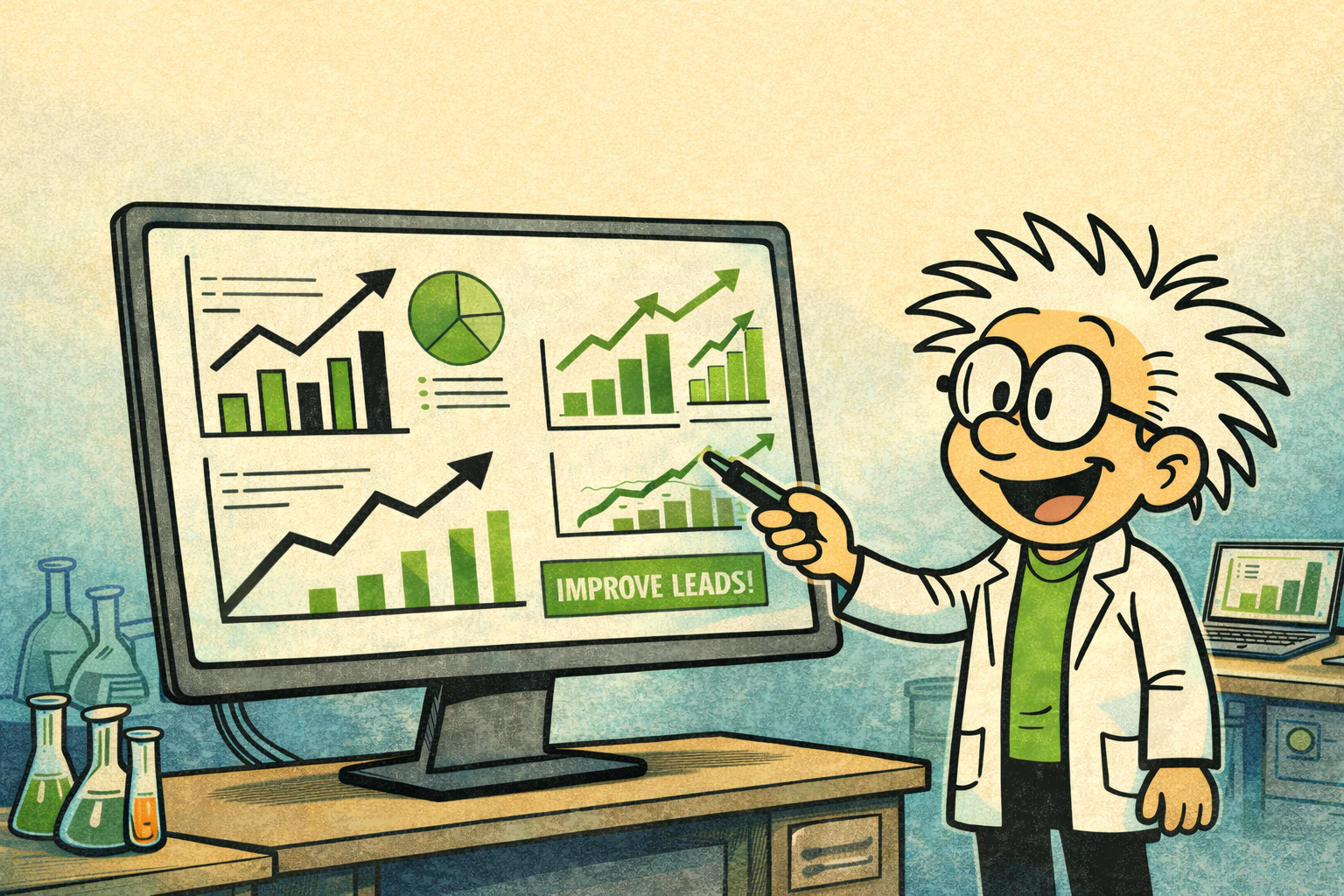
The good news is this, you do not need a full rebuild to fix it. Steady updates to design and content can move the needle faster than you think, and A, B testing can help you stop guessing and start learning.
A “living website” wins because it stays current
Think about your favorite local restaurant. That restaurant does not keep the same menu for five years. The owner adjusts prices, updates photos, adds a seasonal special, and changes the look of the dining room when it starts to feel dated.
Your website works the same way.
A living website gets regular improvements, based on real visitor behavior. The message stays sharp. The pages stay clear. The design stays modern. The living content stays helpful. A stagnant website does the opposite. It stays quiet while the market moves.
Your visitors make a fast decision, then they backfill the reasons
Most visitors do not read your homepage like a novel.
They scan.
They look for clues that you are legit. They ask themselves questions like these:
- A visitor wants to know if they are in the right place.
- A visitor looks for proof that you can solve the problem.
- A visitor checks if the brand feels trustworthy and current.
- A visitor searches for the next step that feels easy.
That decision often happens in seconds. The details come later. A website that gets regular updates sends a simple signal, even before someone reads a word.
“This business is active, and they care.”
That signal builds trust faster than any paragraph ever could.
The Grunt Test makes the problem easy to spot
When we review a website, we use something called the Grunt Test. The name sounds funny, but the idea is serious.
A visitor should be able to answer three questions almost instantly:
- What do you offer?
- How will it make my life better?
- What do I need to do next?
When a homepage fails the Grunt Test, leads fall off for a simple reason.
Confused people do not click.
“We need a new website” is often the wrong first move
A full redesign can help, but the timing matters. Some businesses jump into a rebuild because the site “feels old.” That feeling might be true, but a rebuild is not the only solution. Regular updates can fix most performance issues when the foundation is decent. The foundation includes things like structure, speed, and basic usability. When the foundation is weak, a redesign might be needed. Even then, smart planning protects your search rankings.
This case study shows what we look at during a redesign so rankings do not drop: How to Redesign a Website Without Hurting SEO Ranking
The real reason websites stop converting
Leads usually drop because the site stops matching the real business. A mismatch can show up in a lot of ways.
A homepage can highlight services you no longer want to sell. A page can use old photos that no longer represent your work. A headline can sound generic because it was written before you knew your best niche. Even design trends change regularly. Technology changes almost every day.
Even small details cause friction. Friction sounds like this:
“I am not sure if they do what I need.”
“I do not know what makes them different.”
“I do not know what to do next.”
When friction rises, conversions fall.
Design updates build trust when they remove hesitation
Design is not just decoration. Design is a trust tool.
A simple layout can guide the eye. A strong headline can reduce confusion. Clear buttons can help people take action without thinking too hard.
Small design updates can create big outcomes because they remove hesitation.
Here are a few examples of design updates that matter.
- Your homepage should show your offer in one clear sentence.
- Your navigation should guide visitors to the right page.
- Your buttons should tell people the next step.
- Your photos should match your current work.
-
Your layout should make reading easy on a phone.
Each one of those changes can be small. Each one can increase trust.
Content updates build authority when they answer real questions
Great content does more than rank in Google. Helpful content makes customers feel safe. Safety matters because buying from a small business is personal. People want to know they are choosing someone who understands them. A strong content library answers the questions people are already asking. That includes service pages, FAQs, pricing explanations, and educational blog posts.
If you want a solid explanation of why content matters for search and trust, this is a good read: The Importance of Having Great Content for SEO
Content updates also protect you from content decay. Content decay is what happens when a page slowly loses traffic and relevance over time. Fresh competitors show up, search intent shifts, and your “best page” turns into an old page. A living website stays ahead of that decline because it refreshes content on purpose.
A/B testing turns “I think” into “I know”
A lot of website updates get stuck for one reason. The owner does not want to change something that might be working. That fear makes sense. Nobody wants to break a page that brings in leads. A/B testing solves that problem because it gives you a safe way to improve.
Two versions of a page run at the same time.
Version A is the original.
Version B is the new idea.
Real visitors vote with their actions. When Version B gets more form fills, more calls, or more bookings, you keep it. When Version B loses, you learn and move on.
A living website grows faster when testing is part of the process. If you want a real example of how testing can drive growth, this case study shows what small changes can do: Using A/B Testing to Improve Newsletter Sign Up Rates
A simple monthly update rhythm that most small businesses can handle
A “living website” does not mean you work on your site every day. A steady rhythm works better, and it keeps the project from feeling heavy. A monthly update cycle can look like this:
Week 1, pick one page to improve
Choose the page that matters most right now. That might be your homepage. That might be your main service page. That might be your booking page.
Week 2, run the Grunt Test and simplify the message
Ask the three questions. Then cut anything that gets in the way of those answers.
Week 3, create one test you can measure
Pick one change that has a clear goal.
A strong test has one main change, like a headline, a call to action button, or a proof section.
A strong test also has one main metric, like form submissions, calls, or clicks to a booking page.
Week 4, measure results and ship the winner
Look at the data. Keep what works. Remove what fails. Plan the next test.
A living website is not built on guesses. A living website is built on learning.
The “small updates” that often bring the biggest lift
Most businesses expect the biggest gains to come from big changes. Reality works differently. Small updates often win because they touch the exact moment where a visitor decides to trust you.
Use this list as a starting point.
- Your headline should explain your service in plain words.
- Your subheadline should explain the benefit to the customer.
- Your main button should tell visitors what to do next.
- Your proof section should show real results from real clients.
- Your service page should answer the top objections people have.
That is not glamorous work, but it is profitable work.
A, B testing makes this even stronger because you can try small improvements and keep the winners.
What should you test first?
A test should focus on the part of the page that controls the next click. That usually means the top of the page and the call to action.
A good first test can be simple.
- Your headline can name the exact service you provide.
- Your button can describe the action a visitor should take.
- Your proof section can show a clear result you delivered.
- Your layout can make the next step stand out.
Testing works best when each test answers one question.
“Will a clearer headline create more leads?”
“Will a stronger button create more calls?”
“Will better proof create more trust?”
Those questions are simple, and the results are helpful.
Your homepage needs a job description
A homepage should not try to do everything. A homepage has one main job, it should guide a visitor to the right next step. That next step might be a call. That next step might be a form. That next step might be a booking page. The Grunt Test helps you make that job clear.
When the job stays unclear, the homepage becomes a billboard that people drive past.
A/B testing helps you improve that job over time.
The website becomes a “brochure site” when nothing changes
A brochure site is not evil. It is just limited. A brochure site sits there. It lists information. It waits. A growth site does more. A growth site builds trust. A growth site drives action. A growth site learns from behavior. A/B testing helps a growth site learn faster.
Your offers change, so your website should change too
Small businesses adjust all the time.
Owners refine packages. Teams add new tools. Customer needs shift. The website should reflect the best version of your offer, not the version from three years ago. A living website keeps the offer clear, and clarity increases conversion. A living website also helps your sales process because the site answers questions before a call happens.
That means fewer tire kickers, and more good leads.
How to know what to update first
Guessing feels normal, but data is better. Start with these questions:
- Which page gets the most traffic?
- Which page gets the most exits?
- Which page should convert, but does not?
- Which page has the highest business value?
When you find the highest value page, you update that page first.
Some businesses also like using a simple calculator to see how conversion changes can impact lead volume.
This tool can help you estimate the upside: B2B Conversion Optimization Calculator
A quick warning, updates still need a plan
Random updates can create chaos.
A plan prevents wasted effort.
Here are three guardrails that help:
- Your updates should support one clear goal.
- Your updates should match your brand voice.
- Your updates should be measured after launch.
A, B testing fits inside those guardrails because it forces you to define a goal and measure it.
Your next step, Steal our Framework
We built ebooks to help business owners move faster without overthinking. If you want a practical guide you can follow, grab this one: Click Laboratory Ebook Guide
That page can help you pick the right next step based on your goal.

Get Smarter About How Your Website Actually Brings Leads
Our newsletter shares practical insights on turning stale websites into lead-generating machines. You’ll get real-world lessons from what we’re seeing work right now for a growing businesses. Join 3,000+ marketing leaders, including professionals from Google, C12, and Subway, who want their websites to keep getting better over time, not just look nice.