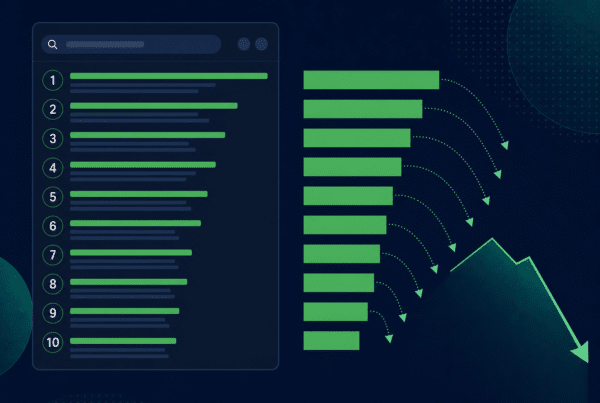
A b2b content audit is not a PDF checklist you run once and file away. It is a repeatable loop that ties every URL on your site to pipeline outcomes: which pages earn impressions, which earn engaged visits, and which actually influence deals. Most audit templates stop at “fix broken links” and “update old posts.” That work matters, but it does not tell a marketing lead what to refresh first, what to consolidate, or what to stop funding.
This guide walks through a five-phase audit loop we use with B2B teams: inventory, score, prioritize, refresh, and measure. You will get a scoring rubric that combines ROT (redundant, outdated, trivial) analysis with decay signals from Search Console and GA4, plus a checklist you can run quarterly without hiring another agency deck. We link each phase to analytics workflows you can adopt this month, not a roundup of audit tools.
What a B2B content audit is (and what it is not)
A content audit inventories what you have published, scores each URL against business and search performance, and outputs a ranked refresh queue. For B2B marketing teams, the audit should answer three questions leadership actually asks: what is working, what is leaking traffic or pipeline, and what should we do in the next 90 days with the headcount we have.
It is not a one-time SEO cleanup. It is not a competitor keyword gap exercise unless those gaps map to revenue stages you care about. It is not a substitute for strategy. The audit feeds strategy with evidence. When audit queries land on the wrong URLs in search, as often happens with generic “content audit” intent, the fix is a workflow post like this one: analytics-led, tied to pipeline, with clear phases and scoring rules.
B2B libraries are large enough that “read everything” fails. You need filters: index status, impressions, engagement, conversion assists, and content age. The inventory phase below defines those filters so you audit the URLs that matter, not every press release from 2019.
The five-phase B2B content audit loop
Think of the audit as a loop, not a project with an end date. Each quarter you run the same five phases. Scores change as competitors refresh, as decay sets in, and as your product positioning shifts.
- Inventory: export every indexable URL with metadata, publish date, template type, and primary topic.
- Score: apply ROT labels and decay metrics so each URL gets a health grade.
- Prioritize: multiply impact (impressions, pipeline proximity) by fix effort to rank the queue.
- Refresh: execute updates, consolidations, redirects, or retirements on the top rows.
- Measure: recheck GSC, GA4, and CRM-assisted metrics after a fixed window (usually 30 to 90 days).
The loop closes when measurement feeds the next inventory pass. URLs you refreshed move to a watch list. URLs you deprioritized last quarter may jump the queue when impressions spike or engagement collapses. That is why we pair audits with a content decay monitoring workflow instead of treating discovery as a annual event.
Phase 1: Build a complete content inventory
Start with a URL export, not a brainstorming session. Pull all indexable pages from your CMS or sitemap. Add columns your team will need for scoring:
- URL, title, H1, publish date, last modified date
- Content type (blog, resource, landing page, docs)
- Primary topic or cluster (manual tag or URL folder)
- Word count and author
- Index status (GSC coverage or crawl tool)
- Impressions, clicks, CTR, average position (90-day GSC)
- Sessions, engagement rate, average engagement time (90-day GA4)
- Pipeline flag if you can tie URL to form fills, demo requests, or influenced deals
Filter out URLs you do not intend to rank: thank-you pages, login screens, thin tag archives. Keep landing pages and high-intent resources even if traffic is low today. B2B deals often start on pages with modest volume but high conversion rates.
In practice, export GSC performance by page and merge on URL in a spreadsheet or warehouse. Marketing ops teams often stop at 500 URLs; for mid-size B2B blogs, 150 to 400 URLs is typical. Segment by hub (/blog/, /resources/, /product/) so you can score clusters, not just isolated posts.
Set a baseline row count and date stamp the export. Next quarter you compare against the same file structure. Inventory is boring work. It is also the foundation every later phase depends on. Skip it and you will refresh posts that do not matter while winners decay.
Phase 2: Score URLs with ROT analysis
ROT stands for redundant, outdated, and trivial. It is a fast first pass before you layer quantitative decay data. We publish a dedicated walkthrough in our content ROT analysis guide; here is how it fits phase two of the audit.
Redundant: two or more URLs target the same intent and cannibalize each other. Signs include split impressions on one query, overlapping titles, and internal links pointing in every direction. Score redundant URLs for consolidation, not parallel refreshes.
Outdated: stats, product names, screenshots, or positioning no longer match reality. Outdated content can still rank briefly on authority, then lose CTR as snippets look stale. Flag any page with examples older than 18 months in fast-moving categories.
Trivial: thin posts that do not earn impressions or support a cluster. Trivial URLs are candidates for merge, noindex, or redirect to a stronger hub. Do not spend a full refresh on a 400-word post that duplicates a pillar.
Assign a ROT label per URL: none, single letter, or combined (e.g., R+O). ROT is qualitative. It catches problems metrics miss, like wrong messaging on a page that still gets branded search. Pair ROT with the decay rubric in the next section so prioritization is not opinion-driven.
Phase 3: Layer decay signals onto your scores
Decay is performance decline over time: falling clicks, slipping position, weaker engagement. ROT tells you if content feels stale; decay proves it with data. Pull 90-day and prior 90-day windows from GSC and GA4 for each inventoried URL.
| Signal | Source | Decay threshold (example) | Review cadence |
|---|---|---|---|
| Impressions down 25%+ QoQ | GSC | URL had 200+ impressions in prior period | Monthly |
| Clicks down 20%+ while impressions flat | GSC | Position change under 2 points | Monthly |
| Average position worse by 3+ points | GSC | Priority cluster URL | Monthly |
| Engagement rate down 15%+ | GA4 | 50+ sessions in period | Monthly |
| Zero pipeline assists two quarters | CRM + GA4 | URL on “money page” list | Quarterly |
Thresholds should match your volume. A blog with 50 posts uses lower bars than a 2,000-page library. Document your thresholds in the audit spreadsheet so the next reviewer applies the same rules.
When a URL trips multiple decay signals and carries an O or R ROT label, it belongs in the top priority band. When metrics are flat but ROT is trivial, deprioritize unless the page supports a strategic launch. Our decay monitoring workflow post covers alert setup and owner assignment so phase three does not depend on one analyst remembering to export GSC.
Phase 4: Prioritize with a scoring rubric
Every audited URL gets a priority score. We use a simple model marketing leaders can explain in one slide:
Priority score = (Impact × Urgency) ÷ Effort
Rate each factor 1 to 5:
- Impact: impressions, pipeline proximity, strategic importance (new product, flagship keyword)
- Urgency: count of decay signals, ROT severity, competitive SERP shifts you observed manually
- Effort: 1 = meta tweak; 3 = section refresh; 5 = full rewrite or consolidation project
Example: a pillar post with 3,000 monthly impressions, two decay signals, outdated stats, and effort 3 (section refresh) might score (5 × 4) ÷ 3 = 6.7. A trivial duplicate with 20 impressions and effort 2 might score (1 × 2) ÷ 2 = 1. Sort descending. The top 10 to 20 rows become your quarterly refresh queue.
Add a “quick win” tag when effort is 1 or 2 and urgency is high. Title and meta fixes, internal link inserts, and stat updates often land in the first 30 days. Reserve effort 4 and 5 work for URLs that justify agency or contractor time.
Share the ranked list with content, SEO, and demand gen in one meeting. Arguments shrink when everyone sees the same spreadsheet. Tie each row to an owner and a ship date. Audits fail when they end in a report nobody owns.
Phase 5: Refresh, then measure against pipeline
Refresh actions fall into four buckets: update in place, consolidate, redirect, or retire. Match the bucket to ROT and decay diagnosis. Do not default to “rewrite” when consolidation fixes cannibalization faster.
Update in place: new stats, examples, internal links, title and meta, expanded sections for SERP format shifts. Most B2B audit work lives here.
Consolidate: merge redundant URLs into one stronger page, then redirect losers. Impressions often concentrate on the survivor within one to two quarters.
Redirect: retire trivial or off-strategy URLs to the closest hub. Clean redirect chains after bulk merges.
Retire: noindex or remove URLs that harm quality signals and have no pipeline role.
Measurement closes the loop. For each refreshed URL, log pre metrics (impressions, clicks, CTR, position, engagement rate) and set a recheck date 30, 60, and 90 days out. Compare to the prior window, not site-wide averages. A pillar that gains 80 clicks per month after refresh is a win even if total blog traffic moved modestly.
B2B teams should also track pipeline proxies: assisted conversions, form fills on updated pages, and influenced opportunities if CRM data allows. Our guide on content analytics for the B2B pipeline maps URL performance to funnel stages so audit results speak to revenue, not just traffic.
B2B content audit checklist
Use this checklist each quarter. Copy it into your project tracker and check items off per URL batch.
- Export full URL inventory with publish and modified dates.
- Merge 90-day GSC performance by page (impressions, clicks, CTR, position).
- Merge 90-day GA4 metrics (sessions, engagement rate, key events).
- Flag index errors and orphan pages missing internal links.
- Apply ROT label to every URL (redundant, outdated, trivial, or clean).
- Apply decay flags using documented thresholds.
- Score priority: impact, urgency, effort; sort queue.
- Assign owners and ship dates for top 10 to 20 URLs.
- Execute refresh, consolidation, or redirect per row.
- Update internal links from hubs to refreshed spokes.
- Log changes (title, meta, sections, redirects) with dates.
- Recheck metrics at 30, 60, and 90 days; feed results into next inventory.
Experienced teams complete steps 1 through 7 in one working day for a 200 URL library if exports are automated. Execution spreads across the quarter. The checklist is the audit; the spreadsheet is the system.
Connect audits to your editorial calendar
Audit output should land on the calendar, not in a slide deck. When you know which URLs score highest, slot refreshes alongside net-new publishing. Teams that only publish forward while ignoring refresh debt see libraries grow and average performance fall.
We build editorial calendars from decay and opportunity data: high-priority audit rows become calendar events with templates for title tests, stat updates, and section expansions. Read how to wire that process in our post on editorial calendar from decay and opportunity data. The short version: audit queue feeds the calendar; calendar capacity limits how many audit items ship per month; shipped items return to measurement.
Capacity planning matters. If marketing can ship four meaningful updates per month, the audit queue should not list forty “urgent” pages. Pick four per month from the top of the ranked list. Re-run scoring monthly so mid-queue URLs with sudden impression spikes can bump scheduled work.
Roles and cadence for content audits
Clear roles prevent audits from stalling:
- SEO or analytics lead: owns exports, decay thresholds, GSC merges, priority scoring
- Content lead: owns ROT qualitative review, refresh briefs, consolidation decisions
- Demand gen or ops: owns pipeline flags, CRM ties, calendar slots
- Web or dev: owns redirects, index fixes, template issues
Cadence that works for most B2B teams: full inventory quarterly, decay monitoring monthly, priority re-score monthly on the top 50 URLs by impressions. Leadership gets a one-page summary: URLs refreshed, clicks recovered, pipeline assists, next quarter top five.
You do not need a huge team. You need a recurring meeting and a shared spreadsheet. Audits fail from neglect, not from missing a paid tool.
Common mistakes in B2B content audits
Avoid these patterns we see on audit RFPs and in-house runs:
- Auditing everything equally. Score by impressions and pipeline first; long tail can wait.
- Ignoring cannibalization. Refreshing two redundant posts doubles work and splits rankings.
- Chasing tool features over outcomes. Exports from GSC and GA4 plus a spreadsheet beat another platform subscription.
- No measurement window. Shipping updates without pre/post logs means you cannot prove ROI.
- Decoupling from pipeline. Traffic-only audits deprioritize high-converting low-traffic pages.
- One-and-done mindset. Without a loop, decay returns and the library drifts again within two quarters.
Another mistake: duplicating ROT analysis in every audit doc instead of linking the phase two playbook. Point reviewers to your ROT criteria once, then focus audit meetings on priorities and owners.
How B2B content audits differ from generic SEO audits
Generic SEO audits emphasize crawl errors, Core Web Vitals, and keyword mapping. Those matter for B2B sites, but marketing leaders hiring for “content audit” usually want editorial and analytics answers: what should we rewrite, merge, or cut to support pipeline?
A B2B content audit weights:
- Query-level performance on money topics, not just site-wide health
- Engagement and conversion assists, not just rankings
- ROT and decay together, not either alone
- Refresh capacity and calendar fit, not an infinite backlog
Agency service pages on the SERP often sell a deliverable PDF. This workflow sells a system your team runs quarterly. That positioning matches how B2B buyers evaluate agencies: they want repeatable process and clear metrics, not a one-time document.
Sample priority outcomes after one audit cycle
After one full loop, teams typically see three outcome bands:
Band A, quick wins (weeks 1 to 4): title and meta updates on high-impression URLs, internal link fixes from hubs, stat refreshes on outdated pillars. Expect CTR and engagement lifts before ranking moves.
Band B, structural fixes (weeks 5 to 12): consolidations, redirect cleanup, section rewrites for SERP format shifts. Expect impression concentration on survivor URLs and fewer cannibalization rows in GSC.
Band C, strategic bets (quarter two): net-new sections or resources only where audit data proves a gap competitors own. Avoid new URLs that duplicate existing intent.
Document which band each queue item belonged to. Leadership learns what “audit” actually produced instead of guessing from site-wide traffic noise.
Turn your audit into a pipeline-backed content plan
A B2B content audit works when it connects inventory to scoring, scoring to a ranked queue, and the queue to calendar slots you can actually ship. ROT catches qualitative rot; decay metrics catch performance rot; priority math settles arguments about what comes first. Measure every refresh so the next inventory pass is smarter than the last.
If you want help running the first loop on your library, we map Search Console, GA4, and pipeline data to a prioritized refresh list with owners and 90-day targets. You keep the system; we accelerate the first scoring pass and train your team on the rubric.
B2B content audit questions
Practical answers on how often to audit, how ROT and decay scoring work together, and how to prioritize refreshes when your library is larger than your team’s capacity.
What is a B2B content audit?
A B2B content audit is a structured review of every indexable URL on your marketing site, scored against search performance, engagement, and pipeline relevance. The output is a ranked list of pages to update, consolidate, redirect, or retire, not a generic SEO checklist.
Unlike a one-time cleanup, a B2B audit runs on a loop: inventory, score, prioritize, refresh, and measure each quarter. Analytics from Google Search Console and GA4 drive scoring so decisions are evidence-based.
The goal is to align content maintenance with revenue stages your team cares about, not to produce a PDF that sits in a shared drive.
How often should B2B teams run a content audit?
Run a full inventory and scoring pass quarterly for most B2B blogs and resource libraries. Run decay monitoring monthly on your top 50 URLs by impressions so you catch CTR and engagement drops between full audits.
Fast-moving product categories or competitive SERPs may need monthly priority re-scores on flagship pages. Smaller libraries under 75 URLs can sometimes audit twice a year if monthly decay checks stay active.
The cadence should match refresh capacity. An audit you cannot execute is just documentation. Four shipped updates per month beats a 200-row backlog nobody owns.
What is the ROT framework in a content audit?
ROT stands for redundant, outdated, and trivial. Redundant URLs target the same intent and cannibalize rankings. Outdated URLs carry stale stats, screenshots, or positioning. Trivial URLs are thin posts that neither rank nor support a topic cluster.
ROT is a qualitative first pass in phase two of the audit. It catches problems metrics alone miss, like wrong messaging on a branded page. Pair ROT labels with decay data before you prioritize work.
See our dedicated content ROT analysis guide for labeling rules and consolidation patterns. Do not duplicate that framework in every audit meeting; link reviewers to the playbook once.
How do you score content decay during an audit?
Pull two 90-day windows from GSC and GA4 for each URL. Flag decay when impressions fall 25% or more quarter over quarter, clicks fall while impressions hold, average position slips three or more points, or engagement rate drops 15% on pages with meaningful session volume.
Document thresholds in your audit spreadsheet so scoring stays consistent. A URL with multiple decay flags and an outdated ROT label belongs in the top priority band.
Decay monitoring workflows automate exports and alerts so phase three does not depend on one analyst remembering to pull data.
How do you prioritize which pages to refresh first?
Use a simple formula: priority score equals impact times urgency divided by effort. Rate impact, urgency, and effort each on a 1 to 5 scale. Impact reflects impressions, pipeline proximity, and strategic importance. Urgency reflects decay signals and ROT severity. Effort reflects whether the fix is a meta tweak or a full rewrite.
Sort URLs by score descending. The top 10 to 20 rows become your quarterly queue. Tag quick wins where effort is low and urgency is high.
Share the ranked list across SEO, content, and demand gen with named owners and ship dates. Prioritization fails when it ends in a report without accountability.
What metrics should a B2B content audit include?
At minimum: GSC impressions, clicks, CTR, and average position by URL; GA4 sessions, engagement rate, and average engagement time; index status; publish and last modified dates; and pipeline proxies such as form fills or assisted conversions where available.
B2B audits should not stop at traffic. A low-traffic case study page that influences deals may outrank a high-impression top-of-funnel post for refresh priority. Flag pipeline proximity explicitly in your impact score.
Query-level exports matter for diagnosing cannibalization and intent mismatch, not just page totals.
How is a B2B content audit different from an SEO audit?
Traditional SEO audits focus on crawl health, technical errors, and keyword mapping. B2B content audits focus on editorial quality, ROT and decay scoring, refresh capacity, and pipeline alignment.
Technical SEO findings still matter, but marketing leaders searching for a content audit usually want to know what to rewrite or merge this quarter. The five-phase loop answers that question with analytics, not just crawl reports.
Position the audit as an operating system your team runs quarterly, not a one-time agency deliverable.
What should happen after a content audit?
Ship refreshes from the top of the priority queue, log every change with dates, and recheck GSC and GA4 at 30, 60, and 90 days. Feed results into your editorial calendar and the next inventory pass.
Consolidate redundant URLs with redirects instead of refreshing competitors on your own site. Update internal links from hubs to refreshed spokes. Share a one-page leadership summary: URLs updated, clicks recovered, pipeline assists, next quarter top five.
Measurement closes the loop. Without pre and post metrics, you cannot prove audit ROI or improve the rubric next quarter.