Find Out Where Visitors Get Stuck. Hesitate. Give Up. Convert. And Why.
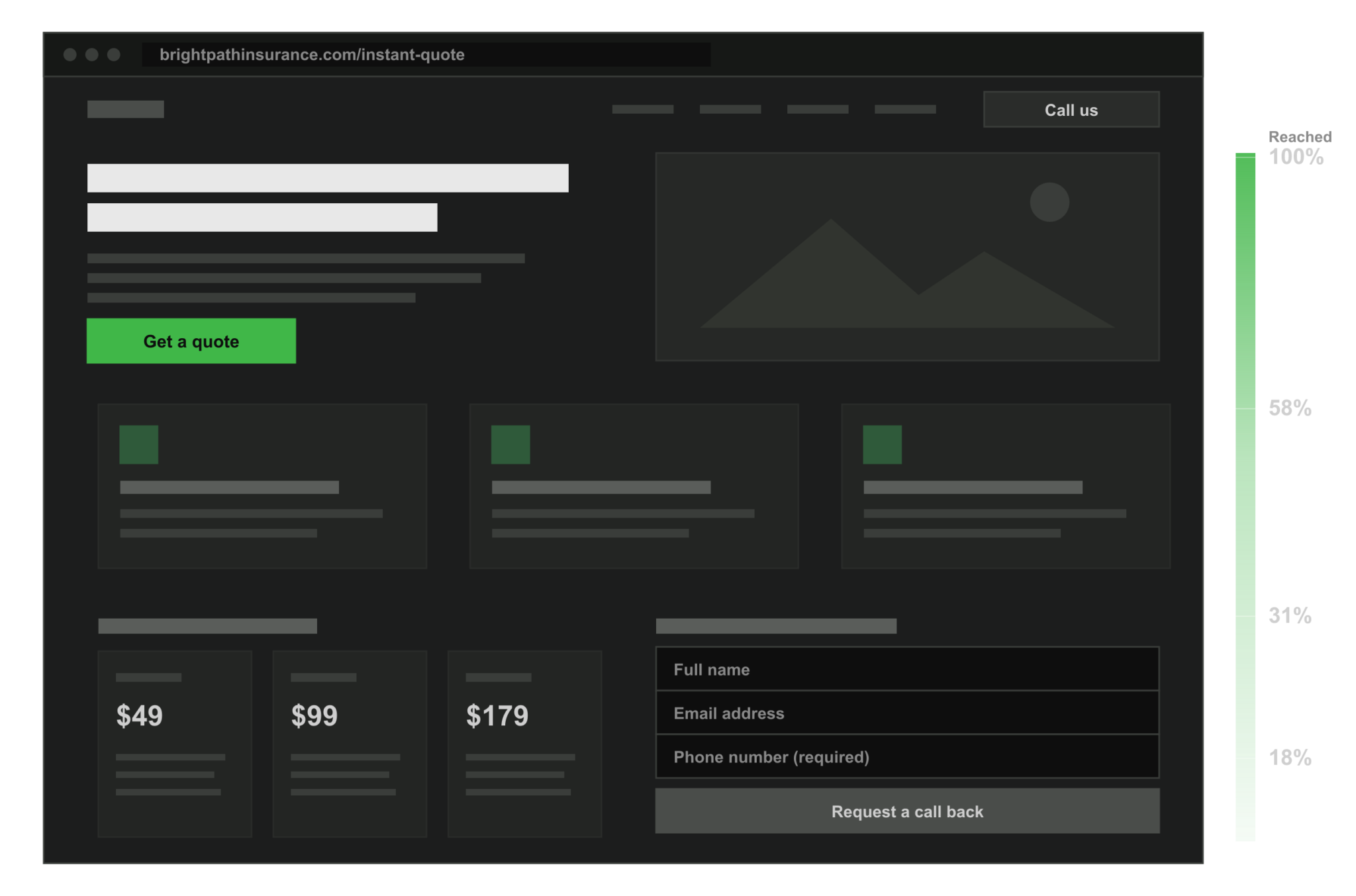

The ad promised an instant online quote. The page asks for a phone number and a call back. Visitors weren’t confused — they were told one thing and asked for another.
Small Friction Points Can Create Big Business Problems.
- +250 bps conversion rate
- +133% form conversion improvement
- +334% clicks to a key product download
You Know Something Isn’t Working. You Just Don’t Know Why.
- Plenty of traffic. Very few leads.
- Mobile converts far worse than desktop.
- People start the form and never finish.
- Visitors read the page, then leave.
- An app feature almost nobody uses.
- A redesign that may or may not be better.
- “Move the button higher.”
- “Shorten the page.”
- “Change the headline.”
- “Remove that section.”
- “Maybe we need another redesign.”
Analytics tells you visitors are leaving. It can’t tell you why.
We watch what real visitors do, find where they get stuck, and fix what is actually broken. Before changing the experience, understand the problem.
Each Data Source Answers a Different Question.
What Happened?
- Traffic sources
- Entry pages
- Devices
- Conversion paths
- Drop-off points
- Engagement
- Form completion
- Returning visitors
What Did People Actually Do?
- What gets attention
- What gets ignored
- Where people click
- How far they scroll
- Where they hesitate
- Where they move backward
- What they try to interact with
- Where it becomes confusing
Where Did They Struggle?
- Form abandonment
- Field-level friction
- Errors
- Navigation problems
- Mobile usability issues
- Checkout friction
- Dead ends
- Repeated actions
Why Did They Arrive?
What Happened Afterward?
- Which conversions became qualified leads
- Which became appointments
- Which became opportunities
- Which became customers
- Which traffic sources produced stronger business results
What Are Customers Telling Us?
- Customer feedback
- Surveys
- Sales conversations
- Support questions
- Reviews
- Common objections
- Chat conversations
The more complete the picture, the less we have to guess.
The Customer Experience Starts Before the Page Loads.
Searches Google for “same-day dermatologist appointment”
Expects a way to book today
Lands on the appointment page. Sees a booking form.
Taps a Meta ad: “5 skin changes you shouldn’t ignore”
Expects to read about skin changes
Lands on the same page. Sees a booking form.
Analytics alone would call that a page problem. It’s a promise problem. So before we blame the page, we ask where the visitor came from and what they were told.
Do Real Customers Follow the Path You Designed?
Looking for reviews you didn’t show
Quits at “phone number”
Never comes back
Recordings and analytics show us the second path. We compare it to the first, find where momentum was lost, and fix that step.
A Digital Marketer’s Guide to Building High-Converting Websites
You’ll learn how to:
- Stop making website decisions primarily from opinions
- Measure how visitors actually use your digital experience
- Use multiple data sources to understand behavior
- Learn directly from customers
- Validate the customer journey
- Identify where visitors are getting stuck
- Build a process for continual improvement
The goal isn’t to constantly redesign your website. It’s to keep learning what your customers need.
A UX Report Is Only Valuable if Something Gets Better.
Messaging Problem?
We can improve the content.
Landing Page Problem?
We can redesign and optimize it.
Website Problem?
We can improve the UX, architecture, or conversion path.
Development Problem?
We can fix the functionality.
Form Problem?
We can simplify or rebuild it.
Campaign Mismatch?
We can improve the audience, advertising, message, or offer.
SEO Problem?
We can improve the search experience and content path.
Tracking Problem?
We can fix the measurement.
Follow-Up Problem?
We can improve what happens after someone converts.
The Goal Isn’t Constant Redesign. It’s Continuous Improvement.
User Experience Testing helps us understand what is happening now. Customer Experience Optimization is the larger Click Laboratory process of taking what we learn and continually improving the digital customer journey.
Measure
Learn
Prioritize
Improve
Measure Again
The goal isn’t constant redesign. It’s constant improvement.
What We Learn Can Make Every Channel Better.
Landing Pages
See where campaign visitors hesitate, stop scrolling, abandon forms, or miss important information.
Conversion Rate Optimization
UX testing provides the evidence that helps determine what should be improved.
Google Ads
Understand why high-intent paid traffic does or does not convert after the click.
Meta Advertising
See whether the audience, creative, offer, and landing-page experience are aligned.
SEO & AEO
Understand what organic visitors do after search brings them to the site.
Content Marketing
See which information attracts attention, what gets ignored, and what visitors look for next.
Web Design & Development
Use real visitor behavior to guide the next improvement instead of relying only on internal preferences.
Apps & Digital Tools
Identify workflows and features that are confusing, overlooked, or harder to use than expected.
User Experience Testing is not an isolated research project. It’s one of the ways we continually improve your entire digital presence.
We Understand the Journey Around the Experience.
We Know Where Visitors Came From
We Combine Behavior With Intent
We Listen to Customers Too
We Look Beyond the Conversion
We Prioritize Business Impact
We Can Implement What We Learn
Questions We Hear About User Experience Testing
What is User Experience Testing?
User Experience Testing helps us understand how people interact with websites, landing pages, applications, forms, ecommerce experiences, and other digital interfaces.
We combine analytics, heatmaps, session recordings, form behavior, customer feedback, campaign context, and sales information to identify where people struggle and what may deserve improvement.
What is Customer Experience Optimization?
Customer Experience Optimization is Click Laboratory’s larger methodology for continually improving the digital customer journey using measurable visitor and customer behavior.
User Experience Testing helps us understand what is happening. Customer Experience Optimization turns those insights into an ongoing process of learning and improvement.
What is the difference between UX testing and CRO?
UX testing focuses on understanding how people use the experience and identifying where problems occur. Conversion Rate Optimization uses those insights, along with other data, to improve conversion performance.
UX testing helps us understand the problem. CRO helps us improve the result.
What are session recordings?
Session recordings recreate anonymized visitor interactions so we can see how people navigate, scroll, click, and use a page.
They can reveal behavioral patterns that aggregate analytics may not make obvious.
What are heatmaps?
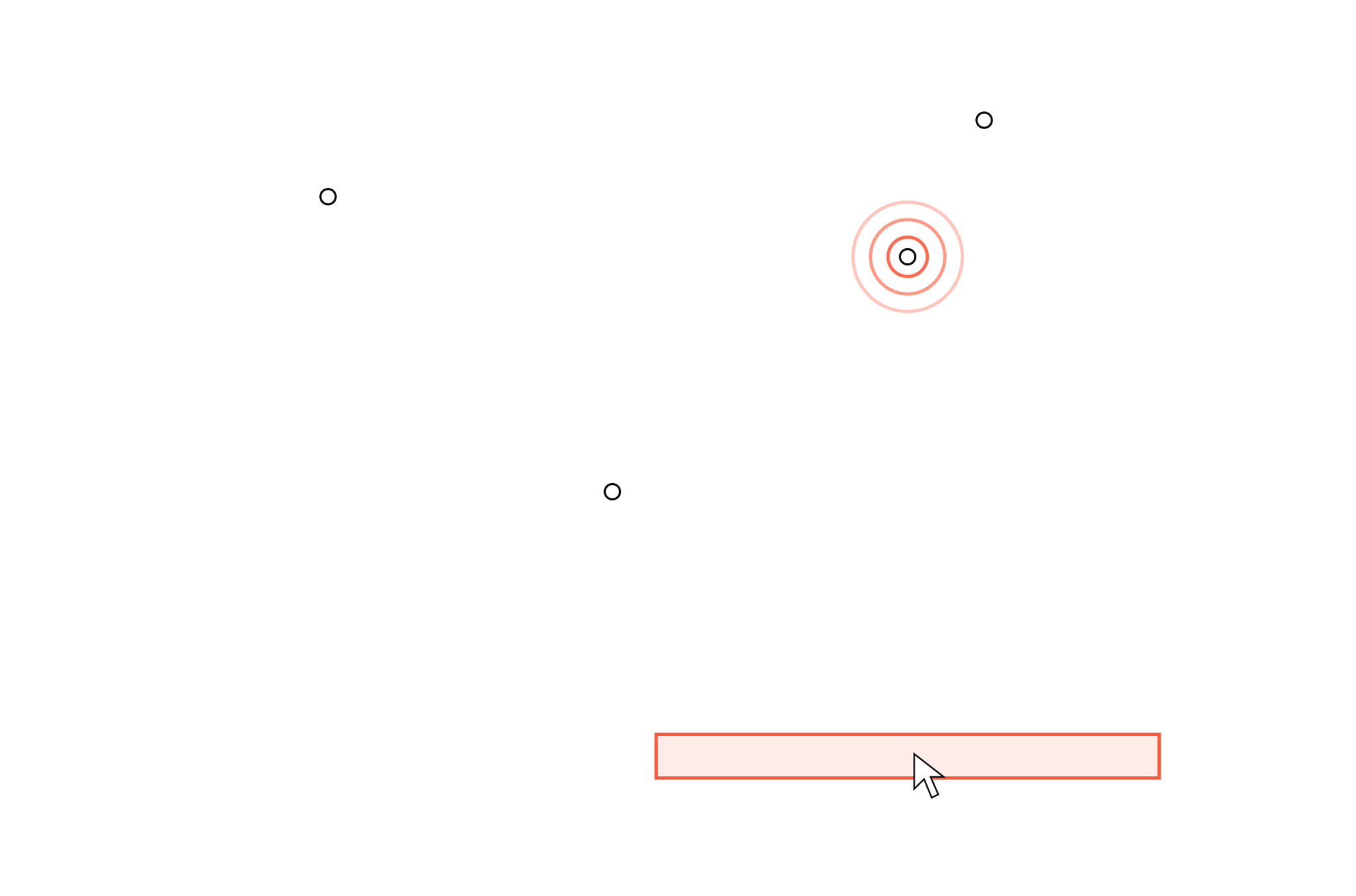
Heatmaps visually show where visitors click, scroll, or focus their attention.
They help show whether important information is being noticed and whether visitors interact with a page as expected.
Do you talk to customers or only analyze website data?
Both can be useful. Analytics and behavioral data tell us a great deal, but customer feedback, sales conversations, surveys, reviews, and support questions can help explain why that behavior occurs.
How much traffic do we need?
It depends on the type of analysis. Analytics, recordings, heatmaps, customer feedback, and qualitative observations can provide useful insights with lower traffic levels.
Controlled A/B testing generally requires more traffic to produce reliable conclusions. We choose the method based on the evidence available.
Do you only test websites?
No. We can evaluate landing pages, campaign experiences, ecommerce flows, forms, applications, mobile experiences, checkout processes, and digital tools.
Anywhere customers interact with your digital presence can potentially provide useful behavioral evidence.
Find Out What Your Visitors Are Trying to Tell You.
If people are reaching your website, landing pages, campaigns, or applications but you don’t fully understand why they convert, hesitate, or leave, we can help you see what is happening.
- You may discover one major issue.
- You may discover several smaller ones.
- Or the evidence may show the digital experience isn’t where the biggest problem exists.
Either way, you’ll have a clearer understanding of what real visitors are doing and what deserves attention next.