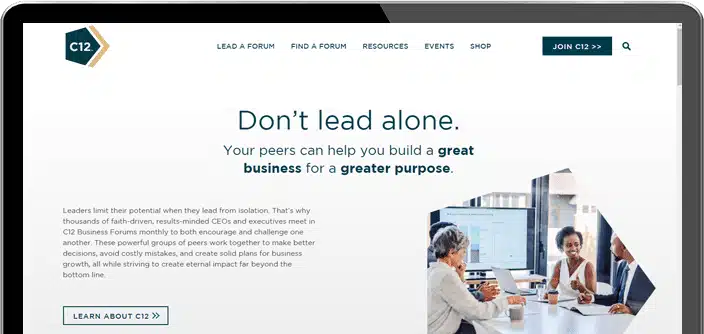
A useful definition of ad landing page message match is continuity from the promise in an ad to the experience that follows the click. It is not merely repeating a keyword. The visitor should recognize the audience, problem, offer, next step, and tone they responded to. Start with the full lead-generation system overview for the wider context, then use this guide to inspect the ad-to-page handoff.
That handoff is easy to overlook because teams often own different pieces of it. A paid media manager writes the ad, a designer builds the page, a sales team defines a good lead, and an operations team manages the follow-up. The prospect experiences none of those boundaries. They experience one conversation. If the ad says one thing and the page opens another, the prospect has to spend attention figuring out if they are in the right place.
Message match gives you a practical way to reduce that uncertainty. It connects the search query or audience signal to a relevant ad, then connects the ad to a page that makes the promised action clear. This guide covers the full chain, examples of weak and strong pairs, a repeatable audit workflow, campaign mapping, personalization guardrails, measurement, and a testing plan for B2B teams.
What ad landing page message match actually means
Ad and landing page message match means that the landing page continues the same conversation started by the traffic source. The page does not need to copy the ad word for word. It needs to confirm the visitor’s reason for clicking and make the next step feel like a logical response to the promise they just saw.
For example, an ad for a B2B website conversion audit may promise a review of lead leaks, a look at key pages, and a short list of recommended fixes. A page with the headline Website services for growing companies may be accurate in a broad sense, but it does not continue that promise. A page with the headline Find the pages costing you qualified leads, supporting details about the review, and a matching audit request does.
Continuity is more than keyword repetition
Keyword repetition is the shallow version of match. It can produce a page that contains the same noun while changing the audience, intent, offer, or next action. A visitor who clicked an ad for a specific evaluation does not feel reassured by seeing that phrase buried in a page title surrounded by unrelated services.
Good match preserves meaning across the handoff. The ad may use a concise promise, while the page explains the process in more detail. The wording can change to fit each format. What should remain stable is the answer to five questions: Who is this for? What problem does it address? What will I get? Why should I trust the next step? What happens after I act?
This is why message match is both a copy decision and a funnel decision. A page can have polished writing and still be wrong for the click. A highly relevant headline can also fail if the form asks for an unrelated commitment. Treat the complete experience as the unit you are evaluating.
A simple continuity test
Open the ad and the landing page side by side. Hide the URL and ask someone who did not build either asset to explain the handoff in one sentence. If they say, “The ad offered a specific review, but the page seems to sell a general service,” you have found a continuity problem.
Next, remove the ad and show only the landing page. Can the reader tell which campaign or intent it supports? Then reverse the exercise. Read only the ad and predict what the page should contain above the fold. The distance between the prediction and the real page is a useful first measure of message drift.
Do not judge match by visual similarity alone. Two assets can share colors and logos while making different promises. Conversely, an ad and page can use different layouts and still match if the visitor’s expected problem, audience, offer, and action remain clear.
Why a mismatch wastes paid clicks
Paid clicks are purchased attention. A mismatch spends that attention asking the prospect to reconcile two messages before they can evaluate the offer. Some people leave immediately. Others continue browsing but lose confidence, which can make the eventual conversion less likely and the sales conversation harder.
The first cost is obvious: money is spent to bring a visitor to a page that does not answer the reason for the visit. The second cost is less visible: the campaign may collect weak signals. A low conversion rate can look like an audience problem, a bid problem, or an offer problem when the real issue is the page handoff.
The click is a promise
An ad creates an expectation before the page loads. That expectation may be explicit, such as a free assessment, or implied, such as a page dedicated to a particular industry or use case. The landing page inherits the obligation to confirm that expectation quickly.
When the page starts with a generic company statement, a broad navigation menu, or a different service, the visitor has to ask whether the click was a mistake. That doubt is not always expressed as an angry comment. It often appears as a short visit, a return to search, a high exit rate, or a form that receives only low-intent submissions.
Mismatch creates diagnostic noise
A campaign with a weak ad-to-page handoff can make every downstream number harder to interpret. The ad may earn clicks because the promise is appealing, but the page may fail to convert. Or the page may generate form fills from people who misunderstood the offer, creating a sales-quality problem that looks like a targeting problem.
Look for patterns across the path rather than assigning blame to one channel. Common symptoms include:
- Click-through rate looks acceptable, but the landing page loses visitors before they reach the primary call to action.
- The page gets form starts, but completion falls when the form asks for information that the ad never prepared the visitor to provide.
- Lead volume rises after a broad promise is added, while sales reports that inquiries do not fit the service or buying stage.
- Several ad groups send traffic to the same page even though their audiences need different proof, terminology, or next steps.
- Analytics shows a conversion, but the sales team says the contact expected a different offer.
These symptoms do not prove that message mismatch is the only cause. Load time, audience quality, pricing, trust, form friction, and follow-up can also matter. The point is to inspect the handoff before changing every other variable. If the page does not continue the ad, improvements lower in the funnel may be built on a confused first step.
Trace the full chain from query to revenue
Message match is strongest when you map the entire path instead of comparing one ad headline with one page headline. The broader funnel matters because each stage adds or removes meaning. The full funnel lead-generation framework is useful here: a leak between traffic, offer, page, lead, follow-up, and customer can be disguised as a problem somewhere else.
For a search campaign, the chain usually begins with a query. For a paid social campaign, it may begin with an audience, creative, or prior interaction. The labels differ, but the questions stay similar. What did the person signal? What did the ad promise? What did the page ask them to do? What did the business do after the form?
- Search query or audience signal: Record the words, need, role, industry, problem, or behavior that brought the person into the campaign.
- Ad: Identify the promise, qualifier, offer, proof point, and call to action that earned attention.
- Landing page: Check whether the first screen confirms the same audience, problem, offer, and next step.
- Form or primary CTA: Verify that the action delivers what the ad and page described, with a reasonable request for information.
- Thank-you and follow-up: Confirm that the next message repeats the offer and sets a clear expectation for contact, delivery, or scheduling.
- Qualified lead, opportunity, and revenue: Feed downstream outcomes back into the campaign view so volume is not mistaken for business value.
Find the weakest handoff
Start the audit at the first meaningful drop in the chain. If search queries are clearly relevant but the ad uses a generic promise, fix the ad or ad-group structure first. If the ad is specific and the page is generic, fix the landing page. If the page and form match but sales receives a different type of inquiry, inspect qualification, offer framing, and audience settings.
This sequence prevents a common waste pattern: buying more traffic to compensate for a page that does not make the existing traffic feel understood. It also makes team discussions more productive. Instead of saying that “the campaign is not working,” you can say that the query and ad are aligned, but the page does not confirm the service-specific promise above the fold.
Track the handoff by campaign, ad group, creative, landing page, and form. A single blended conversion rate can hide the fact that one message is producing strong opportunities while another is producing cheap but unsuitable leads.
Audit every message element on the landing page
Message match is not a single headline check. A page can match the headline and still break continuity through the offer, image, CTA, or form. Review the elements in the order a visitor encounters them, then check the deeper sections that support the decision.
Headline and subhead
The headline should confirm the visitor’s reason for arriving without making them translate the ad. If the ad names an audience and problem, the headline should name them too. The subhead can add scope, method, timing, or a qualifier that makes the promise more credible.
A useful comparison is specific versus generic. “Conversion solutions for modern businesses” could sit on almost any agency page. “See where your B2B website loses qualified inquiries” tells the visitor what the page is about. The second line should explain what the review covers and who should request it, rather than introducing a different service.
Teams that need a deeper headline review can use landing page headers that convert as a related internal resource. The principle here is simple: make the top of the page answer the reason for the click before asking the visitor to work.
Offer and promised outcome
The offer is the thing the prospect believes they will receive after taking action. It might be an audit, consultation, calculator, demo, estimate, guide, or evaluation. The offer on the page should be the same offer implied by the ad. If the ad promises a landing page audit and the page only offers a general contact request, the visitor has to guess what happens next.
Explain the outcome in operational terms. Say what will be reviewed, what the visitor will receive, and what the next conversation covers. Avoid adding claims that were absent from the ad if they change the level of commitment. A short audit and a sales presentation are different experiences even if both use the word consultation.
Visual cues and proof
Visual continuity does not mean placing the exact ad image at the top of the page. It means the visual supports the same interpretation. A graphic about a form audit should not lead with a lifestyle image that suggests a different service. A page for a specific software workflow should show that workflow, not an unrelated collection of generic business scenes.
Proof should also be relevant to the promise. If the ad targets marketing leaders at B2B companies, a page filled with proof from unrelated audiences may not remove uncertainty. Use evidence that helps the visitor judge fit, such as a clear process, relevant outcomes, or a realistic description of what the team will inspect. Do not invent client results or imply that a general example is a guaranteed outcome.
CTA and form
The primary CTA should name the next step in terms that make sense after the ad and page. “Request a landing page audit” is clearer than “Submit” because it states the action and the expected benefit. If the ad says “Get a conversion review,” the button can use a close variant, but it should not suddenly ask the visitor to “Book a sales call” without explaining the shift.
The form should ask for information that supports the promised next step. A form for an initial page audit may need a work email, website, and a short description of the campaign. It may not need every detail the sales team could eventually want. When extra qualification is necessary, explain why it is being requested and keep the value exchange visible.
Review the thank-you state as part of the match. The confirmation should restate what was requested, give a realistic next action, and use the same terminology as the form and ad. A relevant ad followed by a vague thank-you page is still an incomplete conversation.
Match intent and audience, not just words
Two ads can contain the same keyword and serve different intent. Someone searching for landing page examples may be learning. Someone searching for landing page optimization services may be comparing providers. Sending both to one page can create a mismatch even if the phrase appears in the headline.
Intent includes the question behind the wording. Identify whether the visitor wants education, a diagnostic, a product comparison, a service conversation, or an immediate transaction. Then make sure the page gives that visitor a suitable amount of explanation and a suitable action. A research-stage visitor may need a framework or calculator. A buyer who has named a service may be ready for a focused audit request.
Use audience qualifiers as continuity signals
Audience match is the other half of relevance. A page for enterprise marketing teams should not make a small business owner infer that the process applies to them. A page for a particular professional service should use the audience’s problem language and address the details that affect the decision.
Qualifiers can be explicit in the ad and page:
- Role: marketing leader, founder, revenue operations manager, or practice owner.
- Business context: B2B sales cycle, local service area, regulated service, or multi-location organization.
- Problem: expensive clicks, weak form completion, poor lead quality, or unclear handoff to sales.
- Readiness: researching the problem, comparing options, or ready to request an evaluation.
Do not force every qualifier into the headline. Use the few that make the page feel unmistakably relevant, then support them with copy, proof, and a next step. If the audience is too broad for one page to speak clearly, split the campaign or create focused variants.
Respect awareness and commitment
A person who clicks an ad promising a checklist should not land on a page that immediately asks for a lengthy sales conversation. A person who clicks an ad offering a service audit should not be redirected to an article that never explains how to request the audit. The action should fit both intent and awareness.
One practical test is to write a “before click” sentence and an “after click” sentence. Before click: “I can get a review of the pages that may be losing qualified leads.” After click: “This page explains the review, who it is for, what I will receive, and how to request it.” If the second sentence sounds like a different transaction, revise the page or the ad.
Bad and good ad-to-page examples
Examples make message match easier to evaluate because they show what the visitor must infer. The following pairs are illustrative. They are not performance claims, and the point is not that one exact sentence will work for every business. The point is to keep the same problem, audience, offer, and action connected.
Example: B2B software evaluation
Bad ad: “See how finance teams reduce manual approval work. Watch the five-minute workflow demo.” The click opens a product homepage with a general headline, six navigation choices, and a request-demo button below several unrelated features. The visitor cannot find the finance workflow or the promised demo quickly.
Better page: “See the approval workflow finance teams use to replace manual status checks.” The subhead says the demo takes five minutes and covers routing, review, and reporting. The visual shows the relevant workflow. The CTA says “Watch the finance workflow demo,” and the form asks only for the details needed to send or schedule it.
The better version does not copy every ad word. It confirms the audience, use case, asset, and next step. If the campaign later targets procurement teams, create a different page or a deliberate variant instead of changing only one noun.
Example: Specific service request versus generic homepage
Imagine an ad aimed at owners of vein practices: “Looking for a better way to generate consultations for your vein practice?” This is a specific problem and audience. If the click opens a generic homepage that says “We provide innovative digital solutions,” the prospect has to start over. The site may offer the right service, but the page does not confirm the reason for the click.
A stronger landing page would open with a service-specific message such as “Generate more qualified vein consultation inquiries from the traffic you already buy.” It would explain the evaluation or audit, identify the practice audience, state the next step, and clarify what information the team needs before making recommendations. The form might ask for the website, current campaign, and preferred contact details rather than pretending every visitor wants the same service.
This vein-practice example is a teaching scenario, not a claim about a real client. Its lesson applies across industries: an ad for a named evaluation should not send people to a generic homepage. A relevant page lets the visitor confirm fit without searching the entire site for the promised service.
Example: Professional services content offer
Bad pair: The ad says “Download the B2B lead quality worksheet,” but the page headline says “Talk to our growth consultants.” The form asks for a phone number, company size, and sales-call availability. Even if the page is well written, the offer changed from a low-commitment worksheet to a sales conversation.
Better pair: The page headline says “Get the B2B lead quality worksheet,” explains how it helps a team compare raw leads with qualified opportunities, and uses a button such as “Send me the worksheet.” A secondary invitation to discuss the findings can appear after the promised asset is explained. The page now honors the initial commitment while still creating a path for higher intent.
Ask six questions before the visitor scrolls
Above-the-fold space is limited, but the visitor should not need a long read to understand the basic transaction. These six questions turn message match into a page-level review. If the answer is missing, unclear, or different from the ad, mark the handoff for revision.
- Am I in the right place? The headline and supporting line should name the service, problem, or audience that the ad introduced. A logo alone does not answer this question.
- Do you understand my situation? Use the prospect’s context, not only an internal category. A marketing leader worried about lead quality should see that concern reflected before being asked to fill out a form.
- What exactly am I being offered? State the audit, demo, guide, consultation, estimate, or other deliverable. Do not make the visitor infer the offer from a vague button.
- Why is this next step worth my time? Explain the immediate value and what the visitor can expect to learn, receive, or decide. This is where a useful outcome beats a generic “contact us” request.
- Can I trust the page to deliver what the ad promised? Add relevant proof, a clear process, realistic scope, and answers to obvious objections. Keep proof tied to the audience and service rather than adding unrelated logos.
- What happens after I act? Tell the visitor whether they will receive a resource, choose a time, hear from a person, or get a review. The thank-you page and follow-up should repeat this expectation.
These questions also help teams decide what belongs above the fold. Not every detail must appear in the first screen, but the page should provide a clear route to each answer. If the visitor must hunt for the offer, qualification, or next step, the page is making the ad do work it cannot finish alone.
Map campaigns and ad groups to the right page
Message match is easier to maintain when the campaign structure reflects meaningful differences in intent. A single page may work for closely related ad groups, but it becomes harder to keep a single page relevant as the promises diverge.
Group by a real decision difference
Separate campaigns or ad groups when the audience, problem, offer, buying stage, or proof needs to change. A group for “landing page audit” may share a page with “conversion audit” if the service and action are truly the same. A group for “landing page templates” may need an educational page or a different offer.
Use a mapping document that a paid media manager, copywriter, designer, and sales owner can all read. At minimum, include:
- Campaign and ad-group name.
- Primary query or audience signal.
- Ad promise and qualifier.
- Landing page URL or variant.
- Offer and primary CTA.
- Form fields and thank-you action.
- Lead-quality definition and downstream owner.
This document is not busywork. It prevents a common failure in larger accounts where a new ad is approved without anyone checking the destination page. It also makes future testing cleaner because you know which part of the system a result belongs to.
Know when one page is enough
Do not create a separate page for every minor wording variation. A shared page is reasonable when the visitors have the same problem, the same offer, and the same next step. Use a new page or controlled variant when a difference changes what the visitor expects to see or do.
For instance, two ads may use different openings but both promise a landing page audit for B2B marketing teams. One page can support them if its headline and body cover that common promise. An ad for a healthcare practice, an ad for a software demo, and an ad for a downloadable checklist should not be forced into that same experience merely to keep the page count low.
Scale with UTM parameters and dynamic personalization
UTM parameters help you identify the source, campaign, content, and sometimes the audience context behind a visit. They do not create message match by themselves. A page that receives utm_campaign=landing_page_audit is not automatically relevant if its visible headline still describes a general marketing service.
Use parameters to preserve reporting and to select controlled variations when the underlying content is genuinely prepared for that context. Dynamic text can change a service name, audience label, or campaign reference, but the output must remain readable, accurate, and consistent with the actual offer.
Set guardrails before personalizing
Personalization adds scale only when the visitor sees a truthful continuation of the ad. Create rules before building dynamic templates:
- Use an approved message map: every campaign value should map to a reviewed headline, subhead, offer, CTA, and proof set.
- Provide a safe default: missing, malformed, or unexpected parameters should show a clear general version, not a blank field or awkward sentence.
- Keep claims stable: do not insert a location, industry, result, or qualification that the business cannot support for that visitor.
- Preserve accessibility: dynamic copy must remain understandable to screen readers and people who do not see the personalized visual treatment.
- Test every route: review the page from the ad, with the parameter, without the parameter, on mobile, and after a refresh.
- Keep measurement intact: personalization should not overwrite campaign identifiers or make the original source impossible to analyze.
There is a difference between useful context and decorative personalization. Showing “Landing page audit for B2B campaigns” to the matching campaign can reinforce continuity. Repeating an unknown keyword in oversized text can make the page look automated and less trustworthy.
Use parameters as context, not a substitute
UTMs and dynamic fields should support a page strategy, not cover a broken one. If five ad groups need five different offers, a single template with swapped nouns may be the wrong architecture. Build the core page first, then decide which parts can vary safely and which parts need a dedicated experience.
Review the personalized page as a buyer would. Does the headline still sound like a promise a real person would make? Does the proof fit the audience? Does the form ask for the same commitment? If the answer changes after a parameter is added, the variation needs content review before it receives traffic.
Keep form friction tied to lead quality
Message match reaches the form. A relevant page can still disappoint if the form asks for a large commitment without explaining the exchange. The goal is not to make every form as short as possible. It is to make the requested effort appropriate to the value of the next step.
Use the phrase quality vs volume as a decision question rather than a slogan. A shorter form may increase completion while collecting less context. A longer form may reduce submissions while giving sales information that helps determine fit. Neither outcome is automatically better.
Choose fields based on the promised action
For a first conversation, ask only for information needed to route, prepare, or qualify that conversation. If the ad promises a website review, a website URL may be useful. If the page promises a resource download, a full phone-based qualification process may not fit the visitor’s expectation.
When qualification is part of the value exchange, say so. A line such as “Share your current campaign and we will use it to focus the review” gives a reason for the field. It also helps the prospect decide if the next step is appropriate. Avoid collecting sensitive or unnecessary information simply because the CRM has a field available.
Read form behavior in context
Compare form views, starts, completions, valid submissions, and qualified outcomes by campaign and page variant. A high form-start rate with low completion may point to friction or a surprise in the fields. A high completion rate with poor qualification may point to vague targeting, weak offer framing, or inadequate questions.
Do not turn a form experiment into a full redesign without isolating the question. First ask whether the form matches the ad’s level of commitment. Then test field count, labels, help text, and error handling in a controlled sequence. The purpose is to learn which information is worth requesting and when, not to remove every useful qualifier.
Measure the path beyond raw leads
A message-match audit needs a measurement plan that follows the visitor past the form. Raw leads are an early signal. They are useful for monitoring delivery and conversion, but they do not tell you if the promise attracted the right people or if the page set an accurate expectation.
Use a metric ladder that mirrors the journey:
- Traffic quality: sessions, engaged visits, landing-page views, and bounce or exit behavior by campaign and page.
- Page engagement: CTA clicks, scroll or key-section engagement, video starts, and time spent where those events are meaningful.
- Form behavior: form starts, validation errors, completions, duplicate submissions, and abandonment.
- Lead quality: valid leads, qualified leads, accepted leads, and reasons for disqualification.
- Sales progression: appointments, conversations, opportunities, pipeline value, customers, and revenue.
- Efficiency: cost per qualified lead, cost per opportunity, customer acquisition cost, and revenue attributed with a stated method.
Use an illustrative math check
Illustrative example only: Campaign A produces 100 form fills at $40 each, but 5 become qualified opportunities. Campaign B produces 50 form fills at $90 each, but 20 become qualified opportunities. Campaign A has the lower cost per lead. Campaign B has the lower illustrative cost per qualified opportunity, at $225 versus $800, before considering later revenue. The numbers are hypothetical and are included to show why raw volume can point to the wrong winner.
Your own definitions matter. Sales and marketing should agree on what counts as qualified, how quickly statuses are updated, and which source fields travel into the CRM. If a form submission loses the campaign, ad group, page, or offer context, the team may not be able to connect message match with downstream quality.
Instrument the handoff
Record the landing page URL, campaign identifiers, creative or ad-group label, offer, and first conversion event. Keep a clear distinction between a CTA click and a completed form. A button click is evidence of interest, not proof that a lead was created.
Then connect the CRM stages back to the original source where possible. Review disqualification reasons for patterns such as wrong service, wrong geography, no budget, duplicate inquiry, or misunderstanding of the offer. These patterns can point to a message problem before they point to a bidding problem.
A small number of qualified leads can be more useful than a large number of mismatched submissions. That does not mean ignoring volume. It means choosing the outcome that represents the business decision the campaign is meant to support.
If you need a simple way to frame lead economics before looking at page changes, use the lead generation calculator as a starting point, then replace assumptions with your own CRM data.
Build a testing plan that prioritizes message risk
Testing message match works best when the hypothesis describes a handoff problem, not just a cosmetic preference. “A new blue button will increase conversions” is a weak starting point if the page still does not mention the service from the ad. “A service-specific headline and offer explanation will reduce uncertainty for visitors from this ad group” gives the team something meaningful to evaluate.
Start with the largest interpretive gap. If the ad promises an audit and the page promotes a general consultation, fix the promise before testing button color. If the page is relevant but the audience is too broad, test a dedicated segment or campaign mapping. If the message is clear but the form asks for a different commitment, test the form and thank-you sequence.
Prioritize tests by decision impact
- Fix obvious contradictions: align the service, audience, offer, and CTA when they clearly disagree.
- Test the main angle: compare problem-led, outcome-led, or proof-led versions only when each remains true to the campaign.
- Test page structure: change the order of headline, proof, process, objection handling, and form based on the visitor’s questions.
- Test commitment: compare a focused audit request with a consultation or resource only if both are viable offers.
- Test detail: refine subheads, visual treatment, button wording, or form help text after the larger message is stable.
Give each test a defined audience, page, primary outcome, and observation window. Avoid changing the ad, page, form, and follow-up at the same time unless you are intentionally replacing the whole experience. A clean test may take longer to interpret, but it gives you a better explanation of what changed.
Use qualitative evidence with the numbers
Analytics tells you where behavior changes. Sales calls, form notes, chat transcripts, and short interviews can explain why. Ask new leads what they expected to receive, which phrase caught their attention, and what they thought would happen after submitting the form.
Use those answers to refine the message map, not to turn one comment into a permanent rule. A repeated misunderstanding across a campaign is more useful than a single preference. For additional CRO test directions, review conversion optimization ideas and select tests that fit the page’s actual problem.
Avoid failure modes with an implementation checklist
Common message-match failure modes
The same breakdowns appear across accounts because message match is often treated as a one-time copy task. Watch for these patterns:
- Generic destination by default: every ad sends to the homepage because it is easy to manage.
- Keyword-only matching: the keyword appears, but the audience, offer, and commitment changed.
- Headline-only review: the hero matches while the CTA, form, or thank-you page asks for something else.
- Campaign drift: a new ad group inherits an old page even though its intent or audience is different.
- Over-personalized copy: dynamic text inserts terms that are awkward, unsupported, or unrelated to the actual offer.
- Volume-only optimization: the team celebrates more submissions without checking qualification or revenue.
- Visual contradiction: the image, proof, or page design suggests a different service than the ad.
- Unexplained qualification: the form adds friction that the ad and page never justify.
Prelaunch implementation checklist
- Write the search query or audience signal at the top of the campaign brief.
- Copy the ad promise, qualifier, offer, and CTA into the landing-page review.
- Confirm the page headline and subhead answer the reason for the click.
- Confirm the page offer, visual, proof, CTA, and form continue the same conversation.
- Check the six visitor questions before approving the page.
- Open every campaign URL with and without its UTM parameters.
- Test mobile layout, form errors, thank-you content, and the first follow-up message.
- Verify analytics events for page engagement, CTA click, form start, completion, and lead status.
- Agree with sales on qualification rules and disqualification reasons.
- Choose one message-risk hypothesis and one primary downstream outcome for the first test.
Assign an owner to each handoff. Paid media can own the campaign-to-page map, content can own the language, design can own the visual cues, operations can own the tracking, and sales can own feedback on lead quality. One person should still be responsible for resolving a mismatch when the evidence appears.
Review the map after major changes to targeting, offer, page, form, CRM routing, or follow-up. Message match decays when campaigns evolve faster than destination pages. A short review at launch and after material changes can prevent an old promise from quietly supporting a new experience.
Turn message match into a conversion audit
Message match is a practical place to begin a conversion audit because it connects the promise that earns the click with the experience that has to earn the next action. The review should compare campaign intent, ad copy, destination page, offer, form, thank-you state, and downstream lead quality as one system.
At Click Laboratory, we can help you identify where that conversation breaks, separate a page problem from an audience or offer problem, and prioritize changes that can be tested. If the review points to a broader page or funnel issue, explore our conversion rate optimization services for a focused next step.
Request a landing page audit when you want an outside view of the handoff. Bring the campaign URLs, ad variations, page analytics, form events, and a few examples of qualified and unqualified leads. The goal is not to make every ad and page identical. It is to make the path understandable, credible, and useful from the first promise through the business outcome.
Message match and landing page questions
A message-match review compares the promise that earns the click with the page, form, and follow-up that receive it. These answers help you find the clearest break before you spend more on traffic or test smaller page details.
What is ad landing page message match on a B2B campaign?
Ad landing page message match is the continuity between the reason someone clicks an ad and what they find on the destination page. The page should confirm the same audience, problem, offer, next step, and level of commitment. It does not require copying the ad word for word or repeating a keyword in every heading. It requires preserving the meaning of the promise.
For a B2B campaign, compare the search query or audience signal, ad, landing-page headline, supporting copy, visual, CTA, form, thank-you state, and follow-up. If an ad offers a landing page audit but the page promotes a general consultation, the handoff is weak even if both assets mention conversion. A matched page makes the visitor feel that the click led to the expected conversation, which gives them a clearer basis for deciding whether to continue.
How should I fix a headline mismatch between my ad and landing page?
Start by writing the expectation created by the ad in plain language. Include the audience, problem, offer, and next action. Then compare that sentence with the landing-page headline and subhead. Replace generic wording with a specific statement that confirms why the visitor arrived. Keep the claim accurate and avoid adding a result or qualification that the business cannot support.
After changing the headline, inspect the rest of the first screen. A matched headline cannot repair a page that still presents a different offer or asks for a different commitment. The CTA, form introduction, visual, and proof should reinforce the same message. Test the revised page against the original for the relevant campaign and measure form starts, completions, qualified leads, and downstream progression, not only immediate clicks.
What should match between an ad CTA and a landing-page offer?
The CTA and offer should describe the same transaction. An ad that says “Get a landing page audit” should lead to a page that explains the audit and offers a way to request it. An ad for a worksheet should not send visitors to a page that immediately asks them to book a sales call. Small wording differences are fine when the audience, value exchange, and commitment remain the same.
Make the offer concrete by stating what the visitor receives, what the next step involves, and what information the form needs. Use a button label that describes the benefit or deliverable rather than a vague word such as “Submit.” Review the thank-you page and first follow-up too. They should restate the promised asset or conversation so the expectation remains intact after the form is complete.
How can I audit message match across ads and landing pages?
Create a row for each important campaign or ad group and record its query or audience signal, ad promise, qualifier, offer, landing page, CTA, form, thank-you action, and lead-quality definition. Open the ad and page side by side, then ask a person who did not build them to describe the handoff. If the description changes audience, problem, or commitment, investigate that row.
Review the first screen first, then the full page and follow-up. Check headline, subhead, offer, visual, proof, CTA, form fields, UTM behavior, and tracking events. Compare page engagement, CTA clicks, form starts, completions, qualified leads, opportunities, and revenue by campaign. Sales feedback about wrong service or misunderstood expectations is useful evidence. Fix clear contradictions before running smaller copy or design tests.
Can UTMs and dynamic landing pages preserve message match at scale?
UTMs preserve campaign context for reporting, but they do not create message match on their own. A page can receive a campaign parameter and still be irrelevant if its visible promise does not reflect the ad. Dynamic landing pages can preserve continuity when each campaign value maps to approved headline, subhead, offer, CTA, visual, and proof variations that remain truthful.
Set guardrails before using personalization. Provide a safe default for missing or unexpected parameters, keep claims supported, preserve accessibility, and test every route on mobile and desktop. Do not use dynamic text to insert awkward keywords or change the commitment without reviewing the full page. If two audiences need different offers or proof, a dedicated page may be clearer than a template that swaps a few nouns.
How should I measure quality vs volume after improving message match?
Measure the full path instead of treating form fills as the final result. Track landing-page views and engagement, primary CTA clicks, form starts, completions, valid leads, qualified leads, appointments, opportunities, customers, and revenue. Keep the campaign, ad group, creative, page, and offer attached to the lead so later stages can be compared with the original promise.
Quality versus volume is a business decision, not a universal rule. A shorter form may create more submissions, while a focused qualifier may create fewer but more suitable opportunities. Agree with sales on qualification criteria and disqualification reasons, then compare cost per qualified lead or opportunity alongside cost per lead. Use the results to decide whether the message attracts the right audience, sets an accurate expectation, and supports useful follow-up.
What should I fix first when an ad and landing page do not match?
Fix the clearest contradiction first: a different service, audience, offer, or commitment. If the ad promises a specific audit and the page opens with a generic company message, make the page confirm the audit above the fold. If the page is specific but the ad attracts a broader or different audience, revise the ad group, targeting, or destination rather than only changing the headline.
Once the central promise agrees, inspect the CTA, form, thank-you page, follow-up, and proof. Confirm that the next action delivers what the ad described and that the form does not introduce unexplained friction. Then establish a baseline for engagement, form behavior, qualified leads, opportunities, and revenue before testing smaller elements. This order protects the budget by resolving message risk before cosmetic optimization.